
The Alcohol Use Disorders Identification Test (AUDIT) is a globally recognised screening tool developed by the World Health Organization (WHO) to identify risky drinking behaviours and early signs of alcohol dependence.
It includes ten questions covering alcohol intake, signs of dependence, and related harm, helping healthcare providers assess severity and plan appropriate interventions.
AUDIT scores range from low to high risk, with scores between 8 and 15 signalling increased harm. It’s used in clinical settings, workplaces, and community programmes, either self-administered or guided by professionals.
According to OhioMHAS, around 503,000 Ohio residents — 5.1% of the population — struggle with alcohol use disorder each year. AUDIT supports early detection, personalised treatment, and stronger public health responses to reduce alcohol-related harm.
What is the Alcohol Use Disorders Identification Test (AUDIT)?
The Alcohol Use Disorders Identification Test (AUDIT) is a standardised screening tool developed by the World Health Organization (WHO) in the 1980s to detect hazardous drinking and early signs of alcohol dependence.
With 10 structured questions, AUDIT evaluates alcohol intake, drinking behaviours, and related harm, helping identify problem drinking before it progresses to alcohol use disorder (AUD). According to the National Center for Drug Abuse Statistics (NCDAS), 17.2% of Ohio adults over 18 engage in binge drinking at least once per month.
AUDIT is widely used in primary care, addiction programmes, and public health initiatives, offering a reliable method for early detection and intervention. It’s effective in both clinical and non-clinical settings, making it accessible to healthcare providers, mental health professionals, and individuals alike.
Its global use supports timely treatment decisions and encourages healthier drinking behaviours before serious consequences develop.
What are the Components of the AUDIT?
The components of the Alcohol Use Disorders Identification Test (AUDIT) are alcohol consumption, dependence symptoms, alcohol-related harm, and risk screening. These components help healthcare professionals determine the severity of potential alcohol use disorder (AUD).
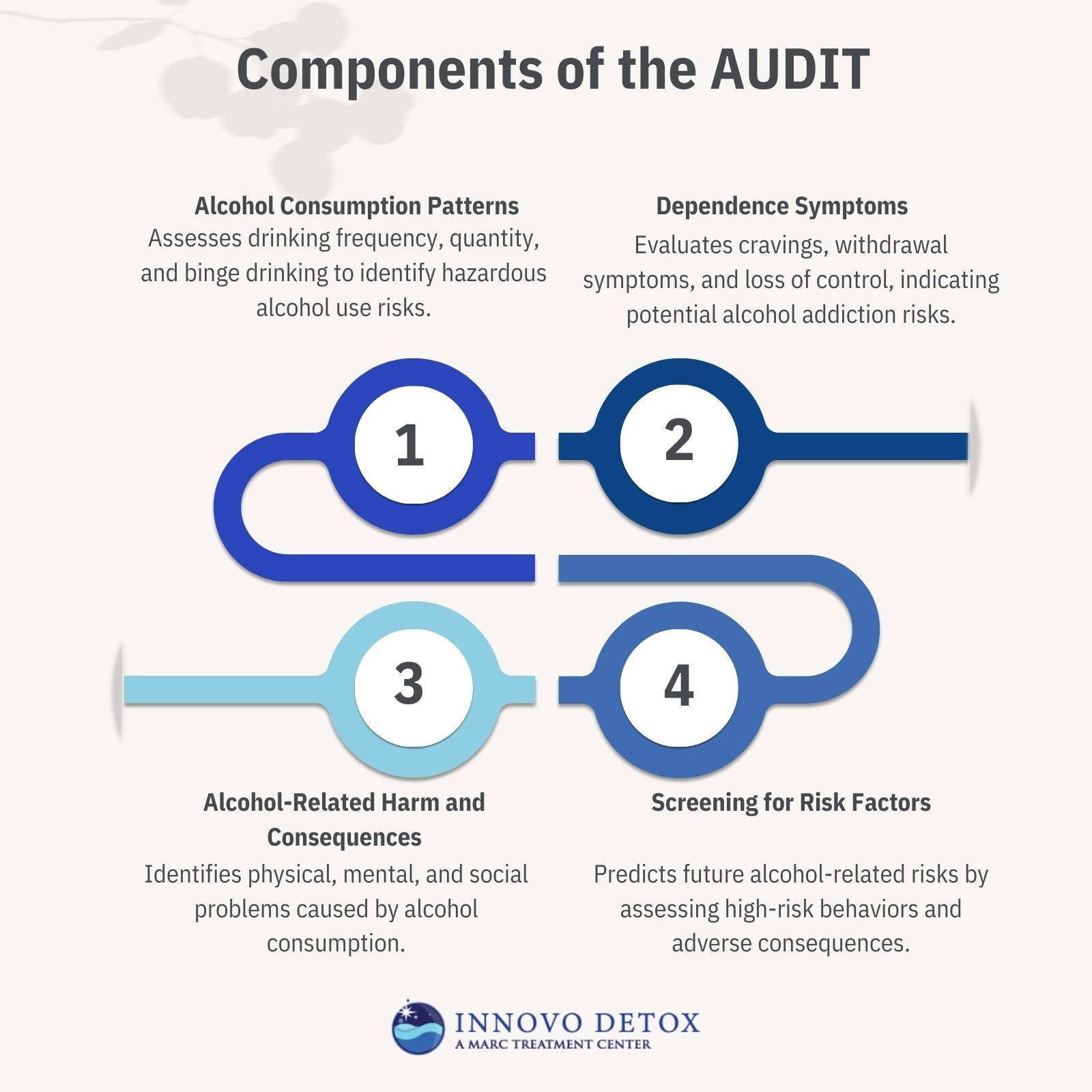
The components of the AUDIT include:
Alcohol Consumption Patterns
The AUDIT focuses on the frequency and quantity of alcohol consumption. It includes questions about how often a person drinks, the typical number of drinks consumed in one occasion, and instances of binge drinking.
Dependence Symptoms
The second component of AUDIT assesses signs of alcohol dependence, including an inability to control drinking, cravings, and withdrawal symptoms. Questions in this section determine whether an individual finds it difficult to stop drinking once they start, whether they need alcohol in the morning to function, or if they experience intense urges to drink.
Alcohol-Related Harm and Consequences
AUDIT evaluates the negative consequences of alcohol use on physical health, mental well-being, relationships, and responsibilities. Questions focus on memory blackouts, injuries, legal issues, and social problems related to drinking. If a person experiences repeated harmful outcomes but continues drinking, it suggests a loss of control and a deepening issue with alcohol dependence.
Screening for Risk Factors
Beyond assessing current drinking habits and dependence, AUDIT also functions as a predictive tool for future alcohol-related risks. By evaluating high-risk behaviors, such as frequent binge drinking or drinking despite adverse consequences, the test helps determine whether preventive measures or professional treatment are needed.
How Does the AUDIT Work?
The AUDIT works by assessing alcohol consumption patterns, dependence symptoms, and alcohol-related harm through a structured 10-question format. Each question is scored from 0 to 4, with a total score ranging from 0 to 40, where higher scores indicate a greater risk of alcohol-related problems.
The test measures three key areas: alcohol intake (questions 1–3), symptoms of alcohol dependence (questions 4–6), and alcohol-related consequences (questions 7–10). A score of 8 or higher suggests hazardous drinking, while 16 or more indicates a high likelihood of alcohol dependence. AUDIT has a sensitivity of 92% and a specificity of 94% for detecting harmful alcohol use. This high accuracy makes it a reliable diagnostic method for healthcare providers to determine intervention strategies, such as brief counseling or structured treatment programs.
What are the Questions Found in the AUDIT Questionnaire?
The questions found in the AUDIT questionnaire are designed to assess alcohol consumption, dependence symptoms, and alcohol-related harm. The test consists of 10 multiple-choice questions, each scored from 0 to 4, to evaluate drinking patterns, alcohol screening, and risk assessment.
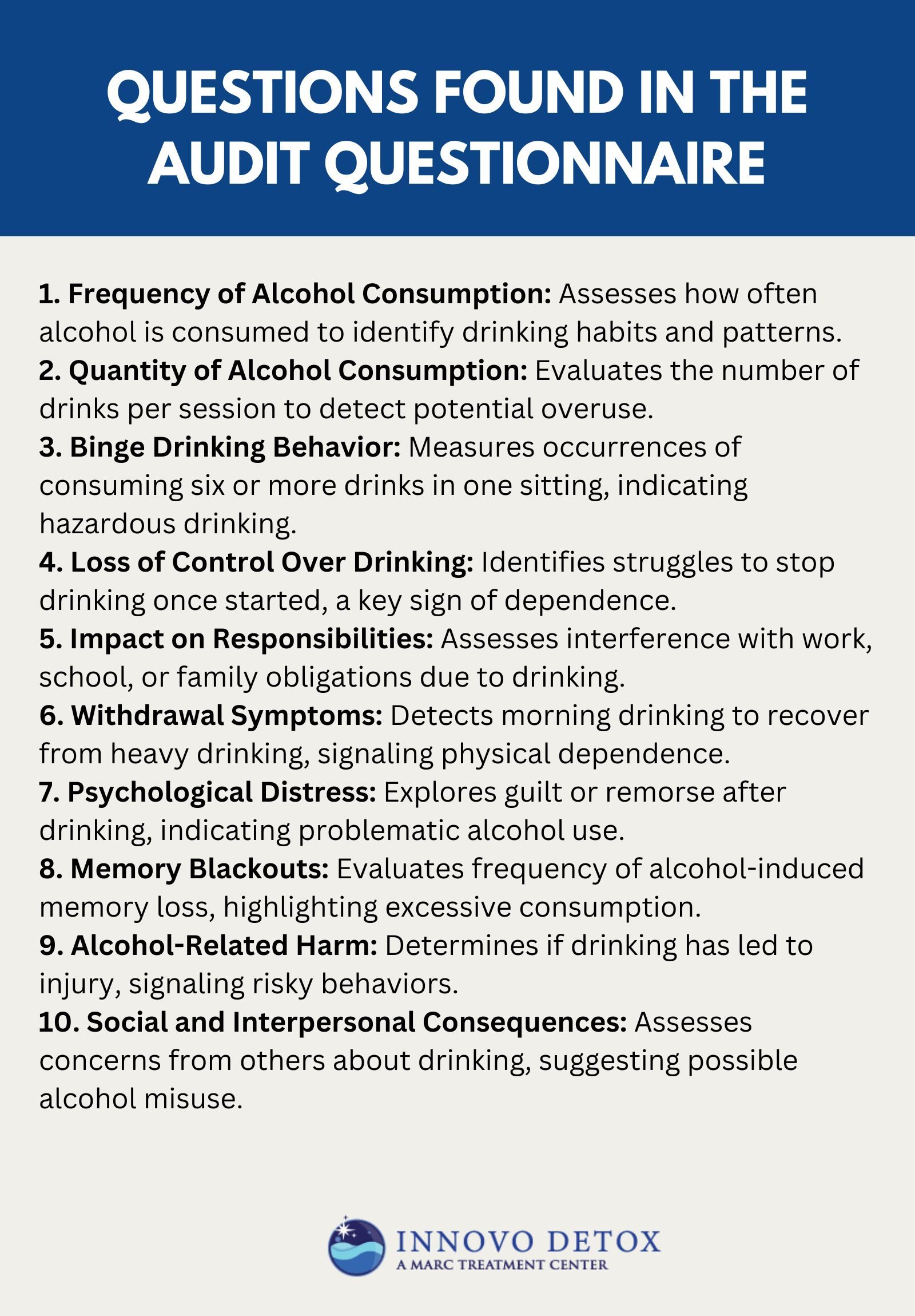
1. Frequency of Alcohol Consumption
Assesses how often an individual consumes alcohol to determine drinking habits and patterns.
2. Quantity of Alcohol Consumption
Evaluates the number of standard drinks consumed on a typical drinking day to identify potential overuse.
3. Binge Drinking Behavior
Measures how often an individual consumes six or more drinks on one occasion, a key indicator of hazardous drinking.
4. Loss of Control Over Drinking
Determines how frequently a person struggles to stop drinking once they have started, a sign of alcohol dependence.
5. Impact on Responsibilities
Assesses how often drinking interferes with daily obligations, such as work, school, or family responsibilities.
6. Withdrawal Symptoms
Identifies the need for a drink in the morning to recover from heavy drinking, a sign of physical dependence.
7. Psychological Distress
Explores feelings of guilt or remorse after drinking, which often indicates problematic alcohol use.
8. Memory Blackouts
Determines how often an individual has been unable to recall events due to drinking, signaling excessive consumption.
9. Alcohol-Related Harm
Evaluates whether the individual or someone else has been injured as a result of their drinking, highlighting risky behaviors.
10. Social and Interpersonal Consequences
Assesses whether a relative, friend, or healthcare provider has expressed concern about the individual’s drinking, indicating potential alcohol misuse.
How are AUDIT Scores Interpreted?
AUDIT scores are interpreted based on a scale of 0 to 40, categorizing individuals into different risk levels for alcohol-related problems. Scores of 0 to 7 indicate low-risk drinking or abstinence, suggesting no immediate concern.
A score between 8 to 15 suggests hazardous drinking, meaning the individual consumes alcohol in a way that increases health risks.
Scores ranging from 16 to 19 indicate harmful drinking, where alcohol use is already causing physical, psychological, or social harm.
A score of 20 or above suggests alcohol dependence, signaling a high likelihood of addiction and the need for professional intervention.
What is the AUDIT-C?
The AUDIT-C is a shortened version of the Alcohol Use Disorders Identification Test (AUDIT) that focuses specifically on alcohol consumption patterns. It consists of only the first three questions of the full AUDIT, assessing an individual’s frequency, quantity, and binge drinking behaviors. This brief alcohol screening tool is commonly used in primary care settings to quickly identify individuals who are at risk for hazardous drinking or alcohol use disorder (AUD).
Unlike the full AUDIT, which evaluates dependence symptoms and alcohol-related harm, the AUDIT-C is designed for rapid assessment. It benefits routine health checkups, workplace screenings, and general medical practice.
A score of 4 or more for men and 3 or more for women indicates potential alcohol misuse, prompting further evaluation.
Is the AUDIT accurate in identifying alcohol use disorders?
Yes, the AUDIT is accurate in identifying alcohol use disorders, with extensive validation across diverse populations. However, its accuracy varies with self-reported data, as some individuals underestimate their drinking. AUDIT-C, while effective for rapid screening, misses cases of alcohol dependence, requiring full AUDIT or clinical interviews for confirmation.
What are the Applications of AUDIT in Pennsylvania Healthcare?
The applications of AUDIT in healthcare include primary care screening, substance abuse treatment, public health interventions, and workplace and military assessments. It helps healthcare providers identify hazardous drinking patterns and guide early intervention strategies for public health.
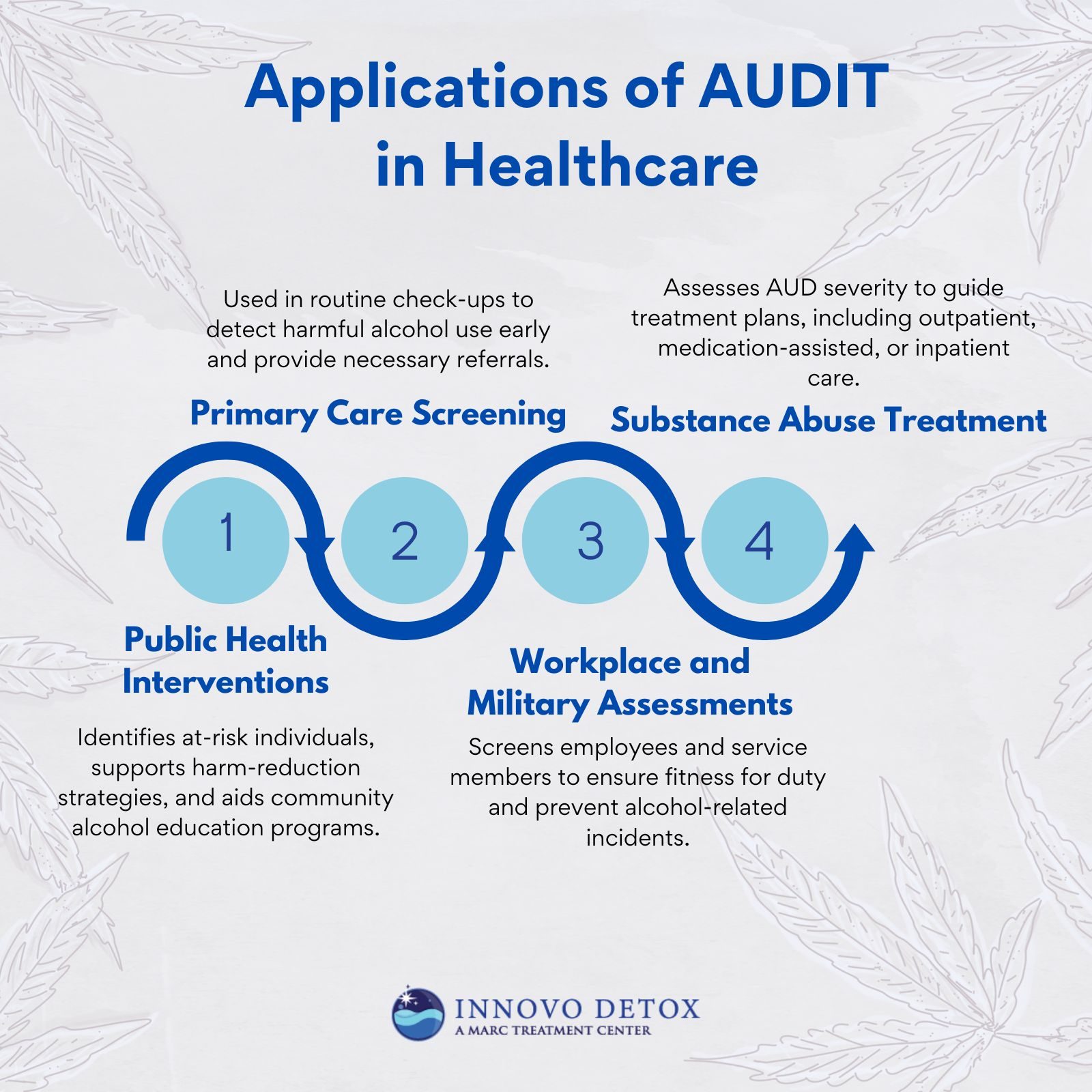
The applications of audit in Pennsylvania healthcare include:
Primary care screening
AUDIT is used in primary care settings to detect harmful alcohol consumption early. Physicians administer it during routine check-ups to assess patients’ drinking habits and provide appropriate guidance or referrals.
Substance abuse treatment
In addiction treatment programs, AUDIT helps determine the severity of alcohol use disorder (AUD) and tailor treatment plans accordingly. It assists clinicians in deciding between outpatient counseling, medication-assisted treatment, or inpatient rehabilitation.
Public health interventions
Public health organizations use AUDIT for population-level alcohol clinical screening, identifying at-risk individuals, and implementing harm-reduction strategies. It supports early alcohol intervention campaigns and community-based alcohol education programs.
Workplace and military assessments
Many workplaces and military institutions use AUDIT to screen employees and service members for alcohol-related risks. This helps ensure fitness for duty, promote health, and prevent alcohol-related incidents in high-risk professions.
How Does the AUDIT Compare to Other Alcohol Screening Tools?
The AUDIT compares to other alcohol screening tools by offering a more comprehensive and globally validated assessment of alcohol consumption and related risks. Unlike the CAGE questionnaire, which consists of only four yes/no questions and primarily identifies severe alcohol dependence, AUDIT provides a broader evaluation by assessing drinking patterns, dependence symptoms, and alcohol-related harm.
Compared to the Michigan Alcohol Screening Test (MAST), which has up to 25 questions focusing on lifetime drinking problems, AUDIT is shorter (10 questions) and more suitable for early intervention rather than retrospective diagnosis.
The World Health Organization (WHO) has validated AUDIT as a reliable tool for screening across diverse populations, making it one of the most widely used alcohol risk assessments in healthcare settings.
What are the Benefits of Using the AUDIT for Early Intervention?
The benefits of using the AUDIT for early intervention include detecting hazardous drinking patterns before they progress into alcohol dependence, enabling timely medical support and behavioral interventions. AUDIT reduces long-term health consequences and societal burdens associated with alcohol misuse.
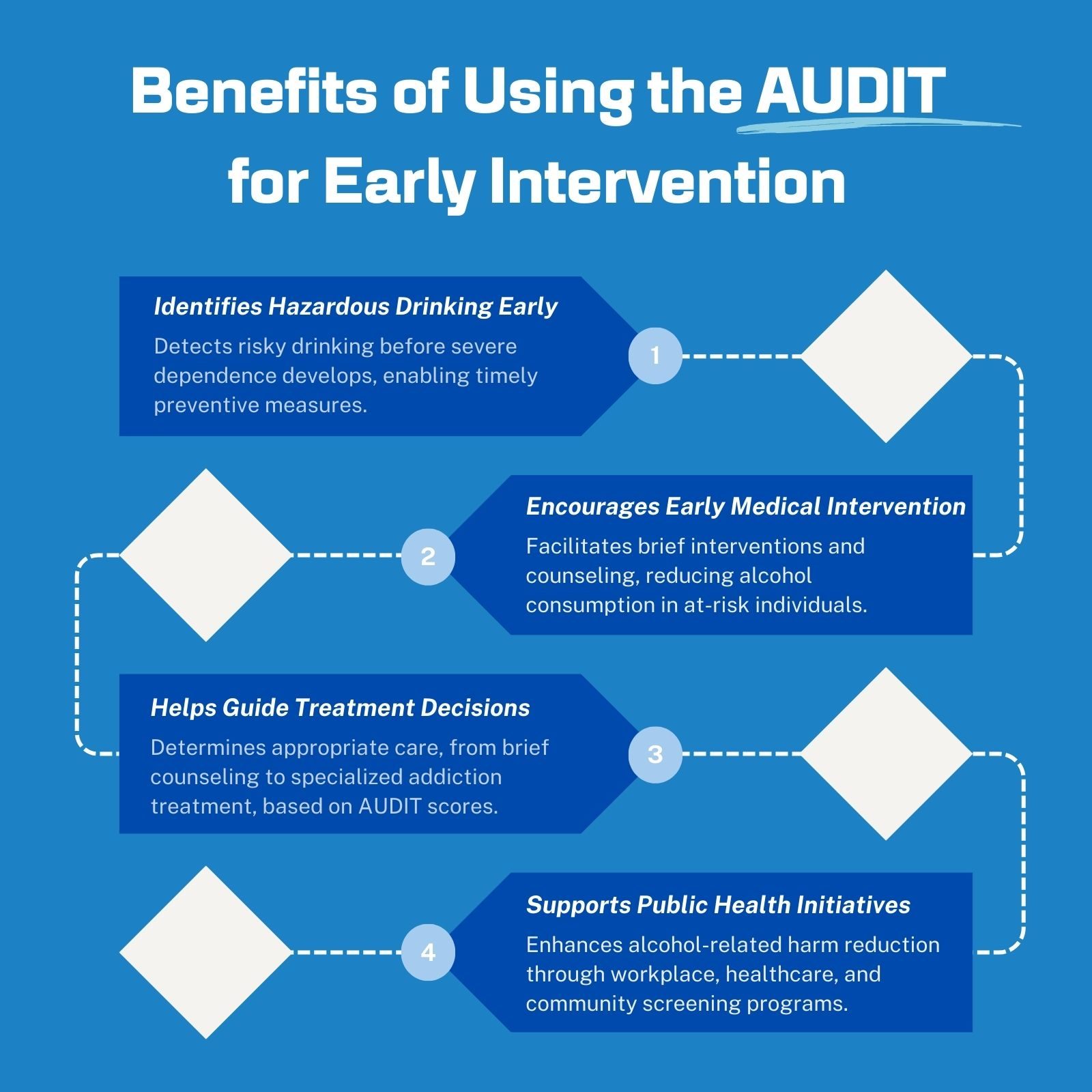
The benefits of using the AUDIT for early intervention are:
Identifies Hazardous Drinking Before Severe Dependence Develops
AUDIT helps detect risky drinking behaviors before they escalate into full-blown alcohol use disorder (AUD). According to “Scoring the AUDIT” on the official website of AUDIT shows that individuals scoring between 8 and 15 on AUDIT are at an increased risk of alcohol-related harm, allowing for early preventive measures.
Encourages Early Medical Intervention
AUDIT facilitates timely medical consultations, brief interventions, and counseling. A study by de Vocht F, et al. 1998, titled “Motivation to reduce alcohol consumption and subsequent attempts at reduction and changes in consumption in increasing and higher-risk drinkers in England: a prospective population survey,” suggests that brief interventions based on AUDIT results reduce alcohol consumption in at-risk individuals.
Helps Guide Treatment Decisions
Healthcare providers use AUDIT scores to determine whether a person requires brief counseling, outpatient therapy, or specialized alcohol addiction treatment. Scores of 16 or higher indicate harmful drinking or dependence, leading to referral for professional addiction treatment.
Supports Public Health Initiatives
As a standardized screening tool used globally, AUDIT contributes to public health efforts in reducing alcohol-related harm. It is integrated into workplace programs, primary care settings, and community outreach, significantly improving early detection and intervention rates.
What are the Limitations of the AUDIT?
The limitations of the AUDIT are self-reporting bias, cultural variations in alcohol consumption, and the need for clinical confirmation in some instances. Since AUDIT relies on individuals honestly reporting their drinking habits, there is a risk of underreporting or exaggeration, which affects accuracy.
Cultural differences influence drinking patterns and attitudes toward alcohol, meaning the test is not equally effective across all populations. While AUDIT is a valuable screening tool, it does not provide a formal diagnosis of alcohol use disorder (AUD) and requires additional clinical evaluation, such as DSM-5 criteria, for confirmation.


