
The CAGE questionnaire is a quick, reliable tool used to screen for problematic drinking behaviours.
It consists of four questions used to determine excessive drinking. According to the Substance Abuse and Mental Health Services Administration, during 2017–2019, the annual average prevalence of past-year alcohol use disorder among young adults was 10.6% (or 138,000 individuals).
Each “yes” response scores one point, and two or more suggest a possible alcohol use disorder. While not a diagnosis, it’s highly effective for early screening.
Used in Pennsylvania primary care, psychiatry, surgery prep, and addiction programs, CAGE helps identify those needing further support. Its strengths lie in being fast, accurate, and suitable for both medical and mental health settings, making it a trusted tool for early intervention.
What is the CAGE Questionnaire?
The CAGE questionnaire is a brief alcohol screening tool used to identify potential alcohol dependence. Its name is derived from the four key questions it asks: Cut down, Annoyed, Guilty, and Eye-opener.
This simple yet effective assessment consists of four yes-or-no questions that evaluate an individual’s drinking habits and their psychological and social consequences.
The CAGE questionnaire is used in healthcare settings, particularly in primary care and mental health evaluations, due to its ease of administration and ability to detect signs of alcohol misuse quickly.
What are the Components of the CAGE Questionnaire?
The components of the CAGE questionnaire consist of four key questions designed to assess potential alcohol dependence and problematic drinking behaviors. Each question focuses on a different aspect of alcohol use.
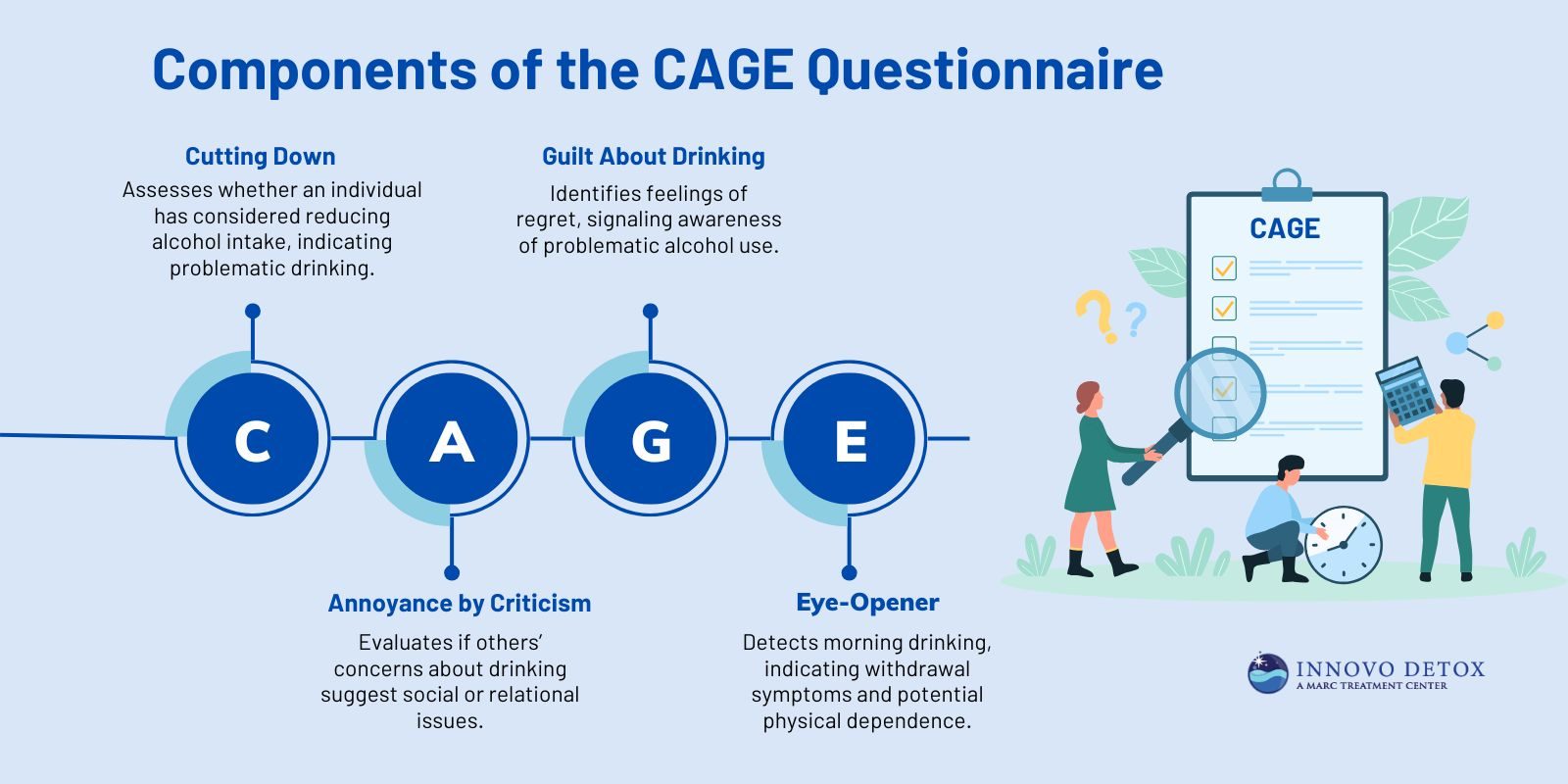
The components of the CAGE questionnaire include:
- C – Have you ever felt the need to cut down on drinking? This question assesses whether an individual has recognized excessive drinking and has considered reducing their alcohol intake, which indicates problematic use.
- A – Have people annoyed you by criticizing your drinking? This explores whether others have expressed concern about the individual’s alcohol consumption, highlighting potential social and relational issues caused by drinking.
- G – Have you ever felt Guilty about drinking? Feelings of guilt or regret related to alcohol use signal an awareness of problematic drinking behaviors and their consequences on personal or professional life.
- E – Have you ever had a drink first thing in the morning (an Eye-opener) to steady nerves or get rid of a hangover? This question identifies physical dependence, as morning drinking indicates withdrawal symptoms and an increased reliance on alcohol.
How Does the CAGE Questionnaire Work?
The CAGE questionnaire works by assessing alcohol-related behaviors through four simple yes-or-no questions, with each “yes” response indicating a higher likelihood of problematic drinking. A total score of two or more “yes” answers suggests potential alcohol dependence and the need for further evaluation.
As a self-reporting tool, CAGE is used in primary care and clinical settings to screen individuals quickly for alcohol-related risks. While it is not a diagnostic tool, it is an effective initial assessment to identify those requiring a more comprehensive evaluation.
What is the Purpose of the CAGE Questionnaire?
The main purpose of the CAGE questionnaire is to screen for potential alcohol dependence by identifying patterns of problematic drinking behavior. It serves as a quick and effective tool for early detection, helping healthcare providers assess alcohol-related risks in patients.
By asking four targeted questions about drinking habits and their consequences, the CAGE questionnaire aids in determining whether further evaluation or intervention is necessary. It is commonly used in medical and psychiatric settings to support clinical assessments and guide treatment decisions.
How is the CAGE Questionnaire Scored?
The CAGE questionnaire is scored by assigning one point for each “yes” response, with a total possible score of 4. A score of 2 or more suggests a potential alcohol use disorder (AUD) and indicates the need for further evaluation.
Higher scores correlate with an increased likelihood of alcohol dependence, prompting clinicians to conduct additional diagnostic assessments.
While CAGE is a useful screening tool, it does not provide a definitive diagnosis and is used alongside other assessment methods for a more comprehensive evaluation of alcohol-related risks.
What are the Applications of the CAGE Questionnaire in Pennsylvania Healthcare?
The common applications of the CAGE questionnaire in Pennsylvania healthcare are its use in identifying alcohol-related issues across various medical and clinical settings. It serves as a quick and reliable screening tool to detect potential alcohol dependence and guide further assessment or intervention.
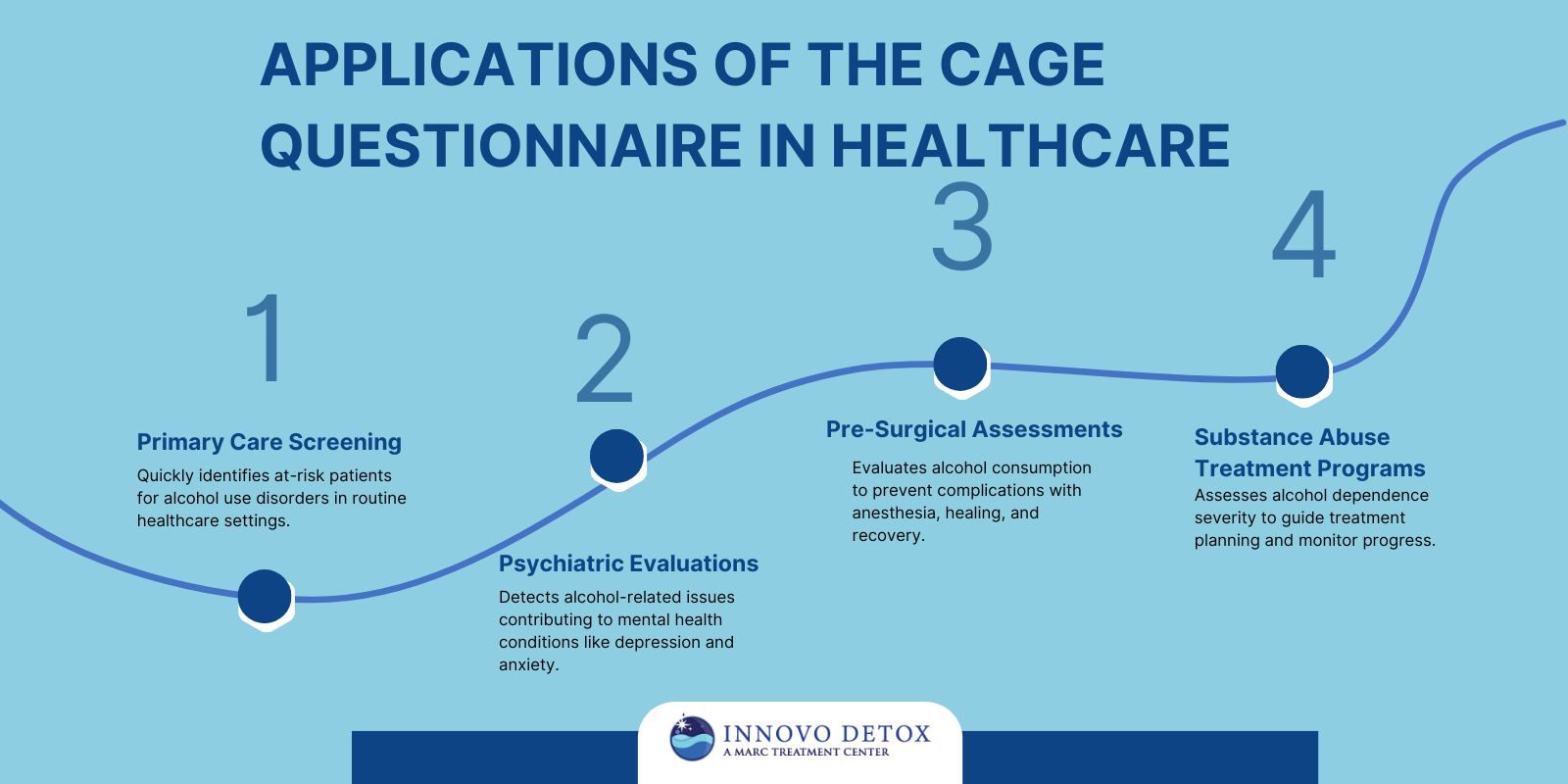
Primary care screening
The CAGE questionnaire is used in primary care settings to assess patients quickly for possible alcohol use disorders. Its brief format allows healthcare providers to identify at-risk patients and recommend further evaluation or treatment.
Psychiatric evaluations
In mental health assessments, CAGE helps identify alcohol-related issues that contribute to psychiatric conditions such as depression or anxiety. This supports accurate diagnosis and treatment planning.
Pre-surgical assessments
Surgeons and anesthesiologists use CAGE to evaluate alcohol consumption before surgery, as excessive drinking impacts anesthesia response, wound healing, and post-operative recovery.
Substance abuse treatment programs
CAGE is commonly used in rehabilitation and substance abuse programs to assess the severity of alcohol dependence. It helps clinicians develop personalized treatment plans and monitor patient progress.
What are the Benefits of Using the CAGE Questionnaire?
The benefits of using the CAGE questionnaire are its simplicity and accuracy in detecting alcohol-related issues. It is widely used in various medical and psychiatric settings to assess alcohol dependency quickly.
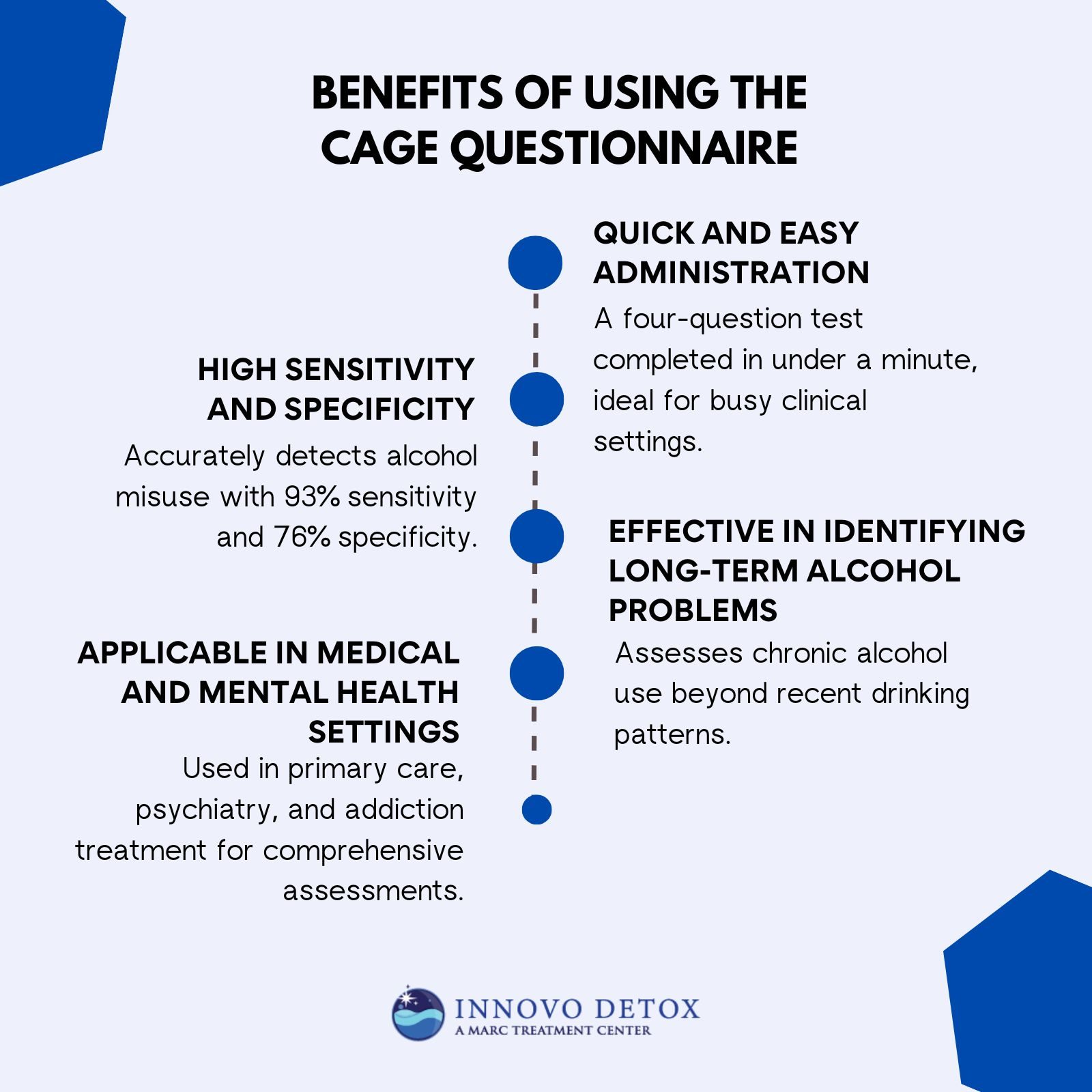
Quick and Easy Administration
The CAGE questionnaire consists of only four questions, making it one of the fastest alcohol screening tools available. It is completed in under a minute, requiring minimal effort from both patients and healthcare providers. This efficiency makes it ideal for use in busy clinical environments, such as primary care offices and emergency departments.
High Sensitivity and Specificity
The CAGE has a high sensitivity (93% for alcohol dependence) and specificity (76% for alcohol-related disorders). This means it accurately identifies individuals struggling with alcohol misuse while minimizing false positives. These characteristics make it a reliable tool for early intervention and referral to treatment when necessary.
Effective in Identifying Long-Term Alcohol Problems
CAGE is particularly effective in detecting long-term alcohol dependency, unlike some screening tools that focus only on recent alcohol use. Its questions assess behavioral and psychological indicators of chronic alcohol use, making it helpful in uncovering persistent drinking patterns that are not immediately obvious.
Applicable in Both Medical and Mental Health Settings
The CAGE questionnaire is used across various healthcare settings, including primary care, psychiatry, and addiction treatment centers. It helps medical professionals assess alcohol-related risks in patients with conditions such as liver disease, depression, and anxiety, facilitating a more comprehensive approach to diagnosis and treatment.
Is the CAGE Questionnaire Accurate in Identifying AUD?
Yes, the CAGE questionnaire is highly accurate in identifying alcohol use disorder (AUD), particularly for detecting long-term dependency. However, it is less effective in identifying hazardous drinking or recent alcohol misuse compared to tools like the Alcohol Use Disorder Identification Test. Despite its limitations, its simplicity and high accuracy for chronic alcohol addiction make it a widely used screening method.
What are the Limitations of the CAGE Questionnaire?
The limitations of the CAGE questionnaire include its focus on long-term alcohol dependency rather than recent drinking behavior. It does not effectively assess binge drinking or occasional excessive alcohol consumption, which are necessary in identifying early-stage alcohol problems.
CAGE relies on self-reporting, which leads to underreporting due to social desirability bias or denial. These factors mean that while CAGE is effective for detecting alcohol dependence, it requires supplementary screening tools for a more comprehensive assessment.
How Does the CAGE Questionnaire Compare to Other Screening Tools?
The CAGE questionnaire compares to other alcohol screening tools like AUDIT and MAST by being shorter and more focused on dependency rather than hazardous drinking patterns.
While AUDIT assesses both the frequency and impact of drinking, CAGE specifically targets long-term alcohol misuse with just four questions. The Michigan Alcohol Screening Test, on the other hand, is longer and more detailed but provides a broader assessment of alcohol-related consequences.
CAGE is best suited for quick screening in clinical settings, whereas AUDIT and MAST are more effective in evaluating alcohol-related risk levels comprehensively.
Can the CAGE Questionnaire be Used as a Self-assessment Tool?
Yes, the CAGE questionnaire is commonly used as a self-assessment tool for individuals concerned about their alcohol consumption. Its four-question format makes it easy to administer without professional guidance, helping individuals recognize potential alcohol issues and seek alcohol addiction treatment.
Where is the CAGE Screening Administered?
The CAGE screening is administered in medical and behavioral health settings to identify individuals at risk of alcohol dependency. It serves as a quick and effective tool for assessing long-term alcohol use issues.
Places where CAGE screening is administered include:
- Psychiatric and addiction treatment centers: CAGE is used as an initial screening tool to assess alcohol dependency in individuals undergoing mental health or substance abuse treatment.
- Primary care clinics: CAGE is frequently incorporated into routine health checkups to help primary care physicians identify alcohol-related risks early.
- Emergency rooms: CAGE is utilized in cases where alcohol-related injuries or conditions are suspected, aiding in immediate intervention and referral for further evaluation.
- Workplace health programs: CAGE is implemented in occupational health screenings to monitor alcohol use among employees and provide support if needed.