
Pennsylvania is grappling with a severe drug crisis, with rising overdose rates and increasing substance use across the state. Understanding the scope of the issue is important for addressing its impact on communities. This fact sheet provides statistics on drug use trends in Pennsylvania, overdose death rates, and the substances most commonly involved.
Key Takeaways:
- An estimated 14 Pennsylvanians die of a drug overdose every day.
- In 2024, Pennsylvania recorded an estimated 3,011 drug overdose deaths.
- Opioids were involved in 66.3% of drug overdose fatalities, with fentanyl present in 60.7% of cases.
- Pennsylvania ranked 33rd nationwide for non-medical drug use among adults in 2024, with 18.0% admitting to misuse in a survey.
- Between 2012 and 2023, drug overdose deaths in Pennsylvania more than doubled from 2,132 to 4,717.
- In 2023, 83.3% of drug overdose deaths were opioid-related, with fentanyl detected in 76.7% of cases.
- The drug overdose death rate in 2023 was 2.1 per 10,000 for females and 5.2 per 10,000 for males.
- Black Pennsylvanians had a drug overdose death rate of 7.54 per 10,000 in 2023, more than double the rate of White residents at 3.02 per 10,000.
- The highest percentage (22.0%) of non-fatal drug overdose emergency visits in 2023 occurred among residents aged 35 to 44 years old.
- Pennsylvania ranked 37th in the nation for drug-related deaths in 2022, with a rate of 39.8 per 100,000.
- In 2022, Pennsylvania had 5,169 drug overdose deaths, ranking 14th in the U.S. for overdose fatality rates.
- Between 2011 and 2021, Pennsylvania’s opioid overdose death rate rose fivefold from 6.2 to 32.8 per 100,000.
- Marijuana was the most commonly used drug among Pennsylvania teens, with 84.85% of teen drug users reporting use in a survey.
- Young adults (ages 18-25) in Pennsylvania are 7.98% less likely to use drugs than their national peers.
- Illicit drug use disorder affects 2.84% of Pennsylvania teens, or nearly 3 in every 100.
- Pennsylvania ranked 27th in the U.S. for youth drug use prevalence in 2022, with 7.6% of adolescents reporting illicit drug use.
- Between 2017 and 2019, 6.7% of Pennsylvania teens used illicit drugs monthly, lower than the national average of 8.2%.
- There were 58,065 emergency room visits for opioid overdoses between 2018 and 2024.
- Pennsylvania recorded 4,081 opioid-related deaths in 2021, making up 75% of all drug overdose fatalities.
- From 2017 to 2019, 15.4% of Pennsylvania adults were affected by substance use disorder.
Prevalence of Drug Addiction in Pennsylvania
- According to the Pennsylvania Attorney General, an estimated 14 Pennsylvanians die of a drug overdose every day.
- According to America’s Health Rankings 2024, in Pennsylvania, 18.0% of adults admitted to misusing prescription medications or using illicit drugs (excluding cannabis) in the past year, placing the state 33rd nationwide for non-medical drug use among adults.
- According to the Drug Overdose Surveillance Interactive Data Report by the Pennsylvania Office of Drug Surveillance and Misuse Prevention (ODSMP):
- Preliminary data from 2024 shows that there were an estimated 3,011 drug overdose deaths in Pennsylvania that year.
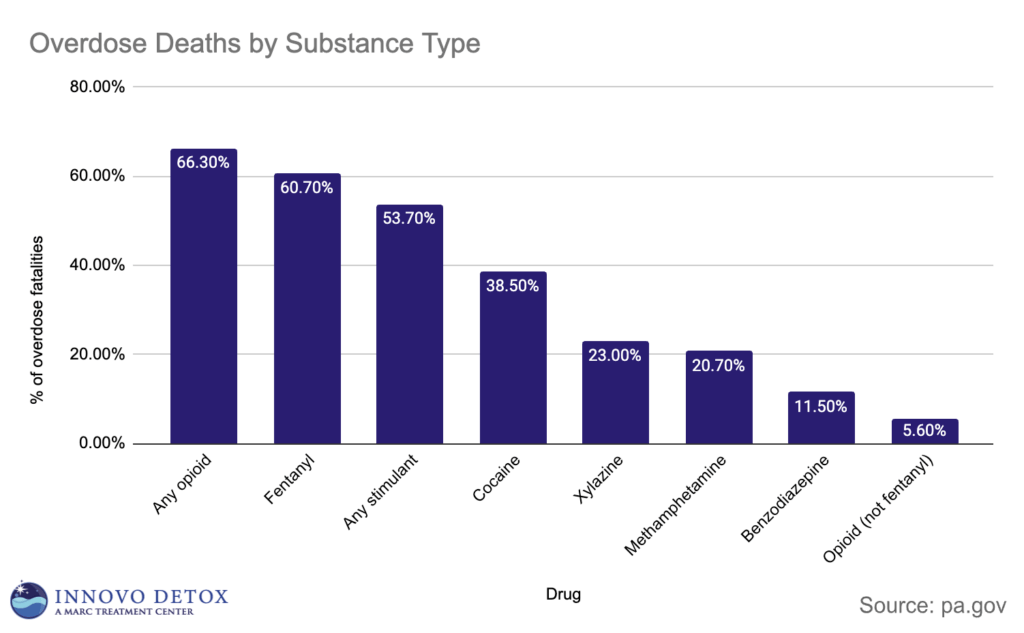
- Of the 3,011 drug overdose deaths, opioids were the most common substance involved. An opioid was involved in at least 66.3% of the deaths — 60.7% of these cases involved fentanyl.
- According to the Opioid Data Dashboard by the Commonwealth of Pennsylvania, between January 2018 and January 2024:
- Pennsylvania’s emergency medical services administered 96,337 doses of naloxone, an opioid antagonist.
- There were 58,065 emergency room visits for opioid overdoses.
- The Get Help Now hotline received 100,128 calls related to opioid overdoses.
- 9,499 cases of Neonatal Abstinence Syndrome were recorded in the state.
- According to the 2023 Opioid Data Dashboard by the Commonwealth of Pennsylvania:
- Every 2 hours in 2023, 1 Pennsylvania resident died of a drug overdose. 70.4% of the deceased were male, and 55.4% of them died at home.
- There was a 9% decrease in drug overdose deaths in Pennsylvania between 2022 and 2023, falling from 5,158 to 4,717.
- Between 2012 and 2023, the estimated number of accidental and undetermined drug overdose deaths in Pennsylvania has more than doubled, rising from 2,132 in 2012 to 4,717 in 2023.

- Of the total drug overdose deaths in Pennsylvania in 2023, 83.3% were opioid related, and 76.7% involved fentanyl.
- In 2023, the rate of drug overdose death in Pennsylvania was 2.1 per 10,000 population for females and 5.2 per 10,000 population for males.
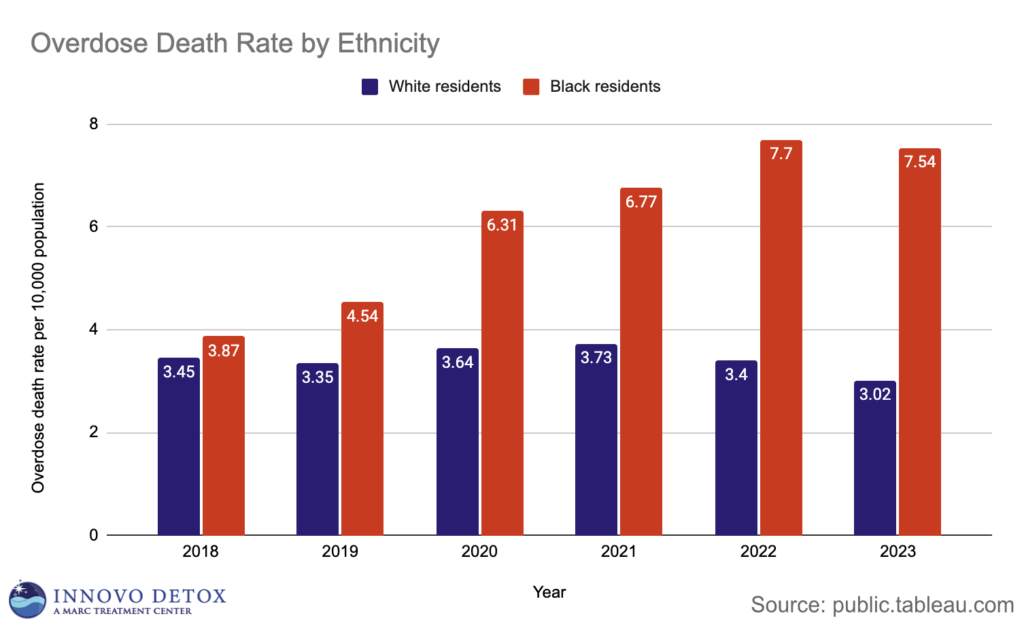
- From 2018 to 2023, Black Pennsylvanians have faced a higher rate of drug overdose deaths than their White counterparts, with a rate of 7.54 per 10,000 population for Black residents and 3.02 per 10,000 population for White residents in 2023.
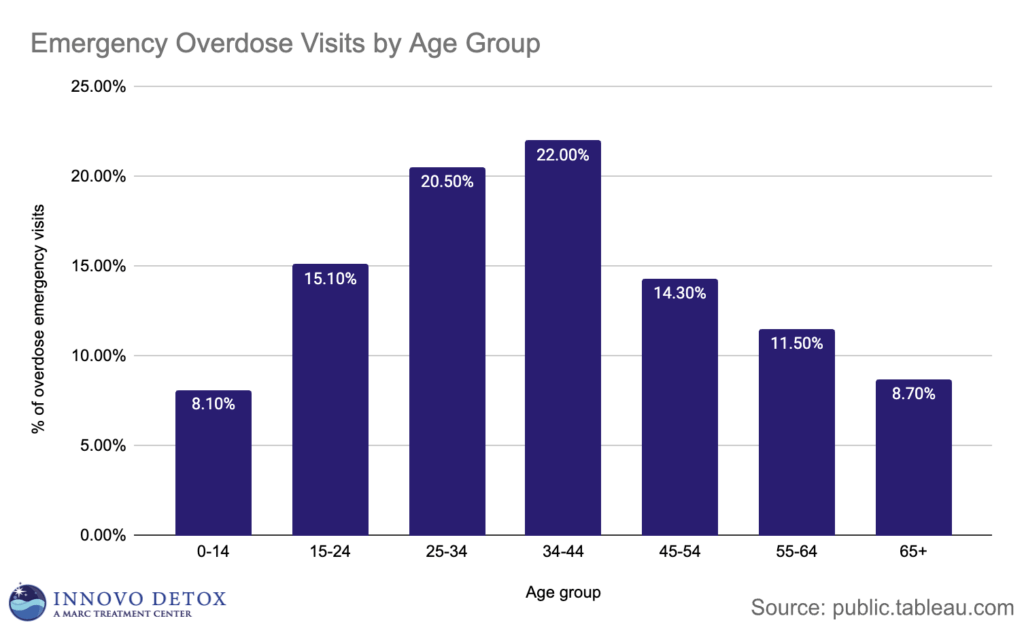
- In 2023, most non-fatal drug overdose-related emergency visits in Pennsylvania occurred among residents aged 35 to 44 years old, making up 22.0% of cases in the state.
- According to 2022 America’s Health Rankings, Pennsylvania had 39.8 drug-related deaths per 100,000 residents annually, ranking 37th in the nation for drug injury fatalities, including unintentional overdoses, suicides, homicides, and undetermined causes.
- According to the CDC’s National Center for Health Statistics, Pennsylvania had a drug overdose death rate of 40.9 per 100,000 population in 2022, with 5,169 cases of drug overdose fatalities. This ranks Pennsylvania at 14th among all U.S. states.
- According to America’s Health Rankings, between 2021 and 2022, among Pennsylvania women aged 18 to 49, 10.1% engaged in the misuse of prescription medications or used illicit drugs like heroin, cocaine, or methamphetamine. This places Pennsylvania 16th in the nation for substance use prevalence in this demographic.
- According to America’s Health Rankings, between 2020 and 2022, an estimated 11.7 deaths per 100,000 adults aged 65 and older were attributed to drug-related causes, including unintentional overdoses, suicides, and other drug-related fatalities. This rate ranks Pennsylvania 22nd nationwide for drug-related deaths among seniors.
- According to 2021 data by the Kaiser Family Foundation (KFF):
- In 2021, opioids were responsible for 75% of all drug overdose deaths in both Pennsylvania and the U.S. Pennsylvania recorded 4,081 opioid-related deaths that year.
- Between 2011 and 2021, Pennsylvania saw its age-adjusted opioid overdose death rate surge from 6.2 to 32.8 per 100,000, a fivefold increase.
- Between 2011 and 2021, Pennsylvania’s drug overdose death rate more than doubled, rising from 18.3 to 43.2 per 100,000. This matched the increase in national rates, which climbed from 13.2 to 32.4 per 100,000 in the same time.
- According to the Commonwealth of Pennsylvania, there were an estimated 299,000 individuals living with an active drug use disorder in 2020.
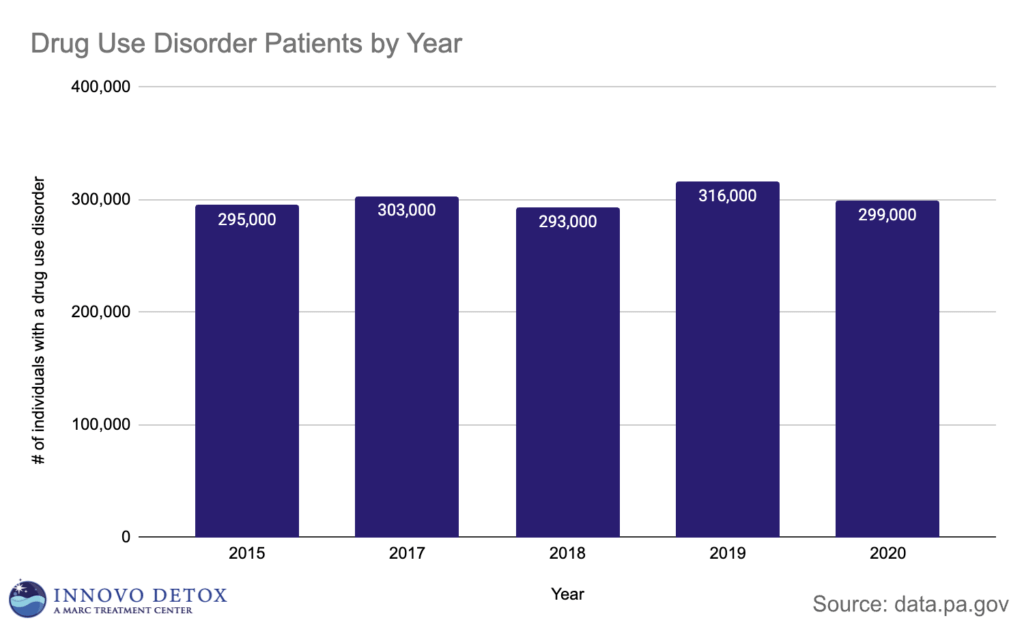
- According to the Substance Abuse and Mental Health Services Administration (SAMHSA), substance use disorder affected 15.4% of adults in Pennsylvania between 2017 and 2019, with approximately 200,000 individuals experiencing addiction each year.
Youth Drug Use in Pennsylvania
- According to 2024 data by the Institute for Research, Education, and Training in Addictions (IRETA):
- Teen drug use in Pennsylvania is lower than the national average, with teenagers in the state being 13.33% less likely to have used drugs in the past month compared to teens across the U.S.
- An estimated 66,000 Pennsylvania teens (7.22% of those aged 12 to 17) reported drug use in the past month.
- Marijuana dominates teen drug use in Pennsylvania, with 84.85% of teenage drug users reporting marijuana consumption.
- Annual marijuana use among Pennsylvania teens stands at 11.92%, indicating that nearly 1 in 9 adolescents aged 12 to 17 has used marijuana in the past year.
- Cocaine use among Pennsylvania teens is relatively rare, with only 0.44% reporting use in the past year.
- Methamphetamine use among teens in Pennsylvania is even lower, affecting only 0.22% of those aged 12 to 17.
- Heroin use among Pennsylvania teens is minimal, with up to 0.05% reporting past-year use, though data is limited.
- Prescription pain reliever misuse among Pennsylvania teens is a concern, with 1.86% reporting nonmedical use of pain relievers in the past year.
- When it comes to young adults in Pennsylvania (ages 18 to 25), 436,000 individuals in this age group reported drug use in the past month.
- Illicit drug use disorder affects 2.84% of Pennsylvania teens aged 12 to 17, meaning that nearly 3 in every 100 teens struggle with problematic drug use.
- According to America’s Health Rankings, in Pennsylvania, 7.6% of adolescents aged 12 to 17 reported using illicit drugs in 2022, placing the state 27th in the nation for youth drug use prevalence.
- According to SAMHSA:
- Between 2017 and 2019, illicit drug use among Pennsylvania teens was at a rate of 6.7%, with about 61,000 youth aged 12 to 17 reporting past-month use.
- Teen drug use in Pennsylvania between 2017 and 2019 was lower than the national average, with 6.7% of youth using illicit drugs monthly, compared to 7.5% in the region and 8.2% nationwide.
- Marijuana use disorder affected 5.0% of young adults in Pennsylvania between 2017 and 2019, with an estimated 65,000 individuals struggling with dependency each year — a rate closely aligned with regional (5.7%) and national (5.6%) trends.
- Opioid use disorder affected 1.6% of young adults in Pennsylvania from 2017 to 2019, with an estimated 21,000 individuals struggling with addiction each year. This rate was slightly higher than the regional (1.1%) and national (1.0%) averages.
Drug Addiction Treatment in Pennsylvania
- According to the Commonwealth of Pennsylvania, Pennsylvania allocates $281.86 per person for behavioral health services and operates 4 substance use disorder treatment facilities for every 100,000 residents.
- According to the 2019 State Profile by the National Survey of Substance Abuse Treatment Services (N-SSATS):
- As of March 2019, Pennsylvania had 600 substance abuse treatment facilities, serving a total of 66,969 individuals in recovery.
- As of March 2019, drug addiction alone accounted for nearly 60% of all clients in Pennsylvania’s substance abuse treatment facilities, with 38,546 individuals receiving care.
- In contrast, 29.4% (18,930 clients) were being treated for both drug and alcohol abuse.
| Substance | # of facilities | # of clients | % of clients |
| Alcohol and drugs | 419 | 18,930 | 29.4% |
| Drugs only | 433 | 38,546 | 59.8% |
Frequently Asked Questions
How Many People Have Alcohol Addiction in Pennsylvania?
Data from America’s Health Rankings shows that in 2022, more than 18% of Pennsylvania’s adults reported binge drinking or heavy drinking in the past 30 days of the survey. Pennsylvania ranks 25th among U.S. states for rates of excessive drinking among its adults. Learn more in our post titled “Pennsylvannia Alcohol Addiction Statistics”.
What Is the Most Common Drug in Pennsylvania?
According to data from the DEA Intelligence Program, cannabis is the most commonly used drug in Pennsylvania. It accounted for approximately 25% of statewide drug cases in 2019.
What Is Pennsylvania’s Opioid Epidemic?
Pennsylvania’s opioid epidemic has led to a severe public health crisis, with 5,449 drug-related overdose deaths in 2021 — nearly 15 per day and over twice the national average. The crisis has impacted families across the state, driven largely by fentanyl and prescription opioids.


